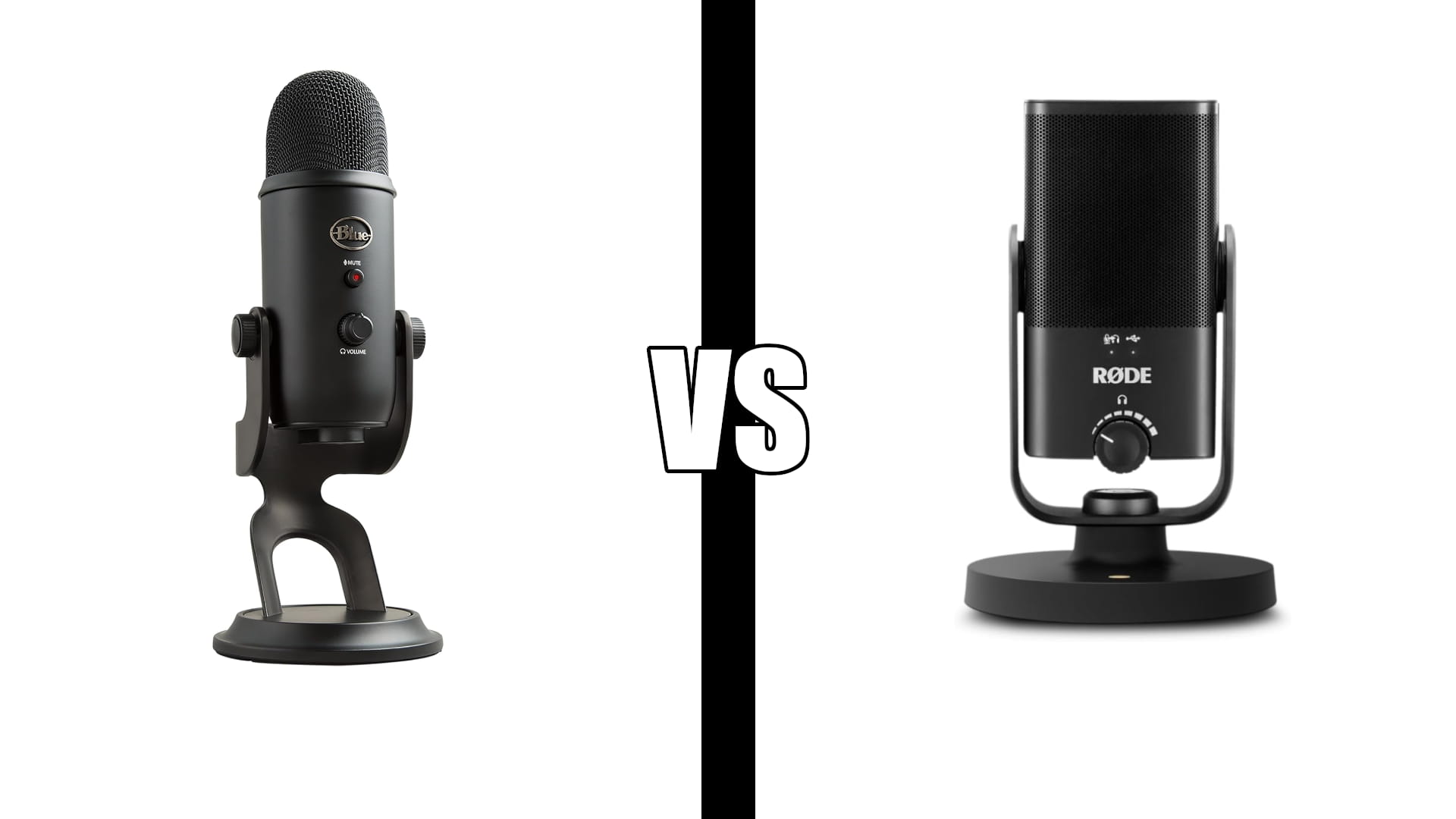
Blue Yeti vs Rode NT-USB Mini: Which USB Microphone Should You Buy?
Category: Tech & Gear | Reading time: 9 min | Last updated: September 2026
Disclosure: This post contains affiliate links. If you buy through our links we may earn a small commission at no extra cost to you.
Blue Yeti vs Rode NT-USB Mini. The Blue Yeti and Rode NT-USB Mini sit at nearly the same price and both deliver a significant upgrade over a laptop microphone or budget headset. The difference is in what they prioritize. The Blue Yeti is a full-featured studio mic with four pickup patterns, onboard controls, and Blue VO!CE software for effects and processing. The Rode NT-USB Mini is a smaller, more focused mic built for voice, calls, podcasts, and voice-over, with a cleaner design and a built-in pop filter. Same price bracket, different approach.
In this comparison
Key differences
Size. The Blue Yeti is a large desktop mic that commands desk space. The Rode NT-USB Mini is compact and sits unobtrusively next to your monitor. If your desk is small or you want a minimal setup the Rode is the easier fit.
Pickup patterns. The Blue Yeti offers four polar patterns: cardioid, omni, bidirectional, and stereo. The Rode NT-USB Mini is cardioid only. For most home office users cardioid is all you ever need, but the Blue Yeti’s flexibility is meaningful for podcasting with a guest, recording instruments, or capturing room audio.
Software. Blue VO!CE software gives you real-time effects, EQ, noise reduction, and HD audio samples. The Rode NT-USB Mini works with UNIFY software which is straightforward but less featured. For calls and basic recording the Rode is plug and play. For streaming and production the Blue Yeti’s software adds real value.
Built-in pop filter. The Rode has one. The Blue Yeti does not. A pop filter reduces plosive sounds when you say words starting with P and B. Without one on the Blue Yeti you either position the mic carefully or buy a separate pop filter.
Zero-latency monitoring. Both mics have a headphone jack for monitoring your voice in real time. The Rode’s hardware volume knob on the mic body is more accessible than the Blue Yeti’s onboard controls during recording.
Desk stand. The Rode includes a magnetic detachable desk stand that mounts to a standard boom arm thread instantly. The Blue Yeti includes an adjustable desktop stand. Both work on boom arms.
Blue Yeti USB Microphone

The Blue Yeti is the most reviewed USB microphone available at 57,065 reviews and 4.6 stars. It became the default recommendation for podcasters and streamers for a reason. The three-capsule array delivers broadcast-quality audio straight into a USB port with no interface or mixer required.
Four pickup patterns cover every recording scenario. Cardioid captures one person speaking directly into the mic. Omni picks up everything in the room equally, useful for conference calls or capturing ambient sound. Bidirectional captures two people facing each other across a desk, ideal for interview podcasts. Stereo captures the full left-right audio field for music and ASMR.
Blue VO!CE software adds real-time effects, compressors, de-essers, and noise reduction that would otherwise require expensive hardware. For streamers on Twitch or YouTube these tools make a meaningful difference to how professional the audio sounds.
The Blue Yeti is larger and heavier than the Rode NT-USB Mini which matters if your desk space is limited. It also has no built-in pop filter. Both are minor issues that a boom arm and a $10 pop filter address easily.
“If you’re just getting started with podcasting or livestreaming, the Blue Yeti is a great choice because it’s plug-and-play and provides great value for the money. You don’t need a mixer or audio interface to get excellent sound. Just connect it to your computer and you’re ready to start recording.”
Who it’s for: Podcasters, streamers, YouTubers, and anyone who wants maximum flexibility from a single USB mic. Also for remote workers who host multi-person calls and want to switch pickup patterns.
Pros:
- 57,065 reviews at 4.6 stars, most validated USB mic available
- Four polar patterns: cardioid, omni, bidirectional, stereo
- Blue VO!CE software with real-time effects
- Onboard mute, gain, and headphone volume controls
- Plug and play on Mac and PC
- Multiple color options
Cons:
- Large footprint on desk
- No built-in pop filter
- Heavier than the Rode NT-USB Mini
- VO!CE software requires a Logitech account
| Spec | Detail |
|---|---|
| Polar patterns | Cardioid, omni, bidirectional, stereo |
| Connectivity | USB-A |
| Monitoring | Zero-latency headphone jack |
| Software | Blue VO!CE |
| Stand | Adjustable desktop stand included |
| Pop filter | Not included |
Rode NT-USB Mini

Rode is an Australian microphone company with a professional audio reputation. The NT-USB Mini brings that heritage to a compact USB form factor designed specifically for voice. The condenser capsule is tuned for speech rather than instruments which translates to natural, clear vocal reproduction for calls and recording without needing EQ adjustments.
The built-in pop filter is a practical advantage over the Blue Yeti. It works well enough that most users never need to add a separate one. The magnetic desk stand detaches instantly and mounts to any standard boom arm thread with no adapter needed. The hardware volume knob on the mic body is more accessible during a live recording session than reaching for software controls.
Works natively with Mac, PC, and iPad with no drivers or software required. For anyone who wants to plug in and sound good immediately with no configuration the NT-USB Mini delivers exactly that.
“The sound is orders of magnitude better than the built-in microphone on my Mac Studio Display. This microphone more than rises up to the challenge. It sounds fantastic. I love the small, modern design of this microphone sitting next to my desk.”
Who it’s for: Remote workers, professionals, and content creators who want a clean, compact microphone tuned specifically for voice. Ideal for video calls, voice-over, and podcasting where sound quality matters but four pickup patterns are not needed.
Pros:
- Rode professional audio heritage
- Built-in pop filter
- Compact design
- Hardware volume knob on mic body
- Magnetic desk stand mounts to boom arm instantly
- USB-C
- Works with iPad
- No drivers required
Cons:
- Cardioid only, no pickup pattern flexibility
- 5,452 reviews, lower than Blue Yeti
- No onboard effects or software processing
| Spec | Detail |
|---|---|
| Polar pattern | Cardioid only |
| Connectivity | USB-C |
| Monitoring | Zero-latency headphone jack with hardware volume |
| Software | UNIFY (optional) |
| Stand | Magnetic detachable desk stand |
| Pop filter | Built-in |
Specs side by side
| Spec | Blue Yeti | Rode NT-USB Mini |
|---|---|---|
| Polar patterns | 4 (cardioid, omni, bidirectional, stereo) | 1 (cardioid) |
| Connectivity | USB-A | USB-C |
| Pop filter | Not included | Built-in |
| Software | Blue VO!CE | UNIFY (optional) |
| Stand | Adjustable desktop stand | Magnetic detachable stand |
| iPad compatible | No | Yes |
| Size | Large | Compact |
| Rating | 4.6/5 · 57,065 reviews | 4.5/5 · 5,452 reviews |
Which should you buy
Buy the Blue Yeti if you podcast, stream, or record content and want the most versatile USB microphone available. The four pickup patterns, Blue VO!CE software, and onboard controls give you more flexibility than any other USB mic at this price. Also the right pick if you ever record with a guest in the same room using bidirectional mode.
Buy the Rode NT-USB Mini if you primarily use your microphone for video calls, voice-over, or solo podcasting and want a compact, clean-sounding mic that is ready to use in under a minute. The built-in pop filter, hardware volume control, and Rode audio quality make it the easier mic to live with day to day.
The honest verdict for most home office workers: The Rode NT-USB Mini. For video calls and professional audio on a desk it is simpler, smaller, and sounds excellent out of the box. The Blue Yeti’s advantages: four pickup patterns and VO!CE software, matter most for content creators who need that flexibility. If that is you, the Blue Yeti is the clear choice.
For a full look at noise cancelling headsets that complement either microphone see our best noise cancelling headphones guide. For webcams that pair well with a dedicated microphone setup see our best webcam for Zoom guide.
Frequently asked questions
Is the Blue Yeti worth it for video calls?
Yes, but it is more than most people need for calls alone. The Blue Yeti delivers excellent call audio in cardioid mode. If you also podcast or stream the extra features justify the size. If calls are your only use case the Rode NT-USB Mini is the more practical choice.
Does the Rode NT-USB Mini work on Windows?
Yes. The NT-USB Mini is plug and play on Mac, Windows PC, and iPad with no drivers required.
Do I need a boom arm for either microphone?
Not required but recommended. Both mics come with desktop stands that work fine. A boom arm keeps the mic off your desk, positions it closer to your mouth for better audio, and frees up desk space. Both mics mount to standard boom arm threads without adapters.
Can the Blue Yeti record two people?
Yes, in bidirectional mode. Switch to the bidirectional polar pattern and position one person on each side of the mic facing each other. This works well for in-person podcast interviews. For remote guests with two people in different locations each person needs their own microphone.
Which sounds better for podcasting?
Both deliver podcast-quality audio. The Blue Yeti has more processing options through VO!CE software. The Rode NT-USB Mini has a naturally clean vocal sound that requires less processing. Most listeners would not notice a difference between the two in a finished podcast.
Continue reading
All prices approximate and subject to change. Check current pricing at checkout. Last updated September 2026.