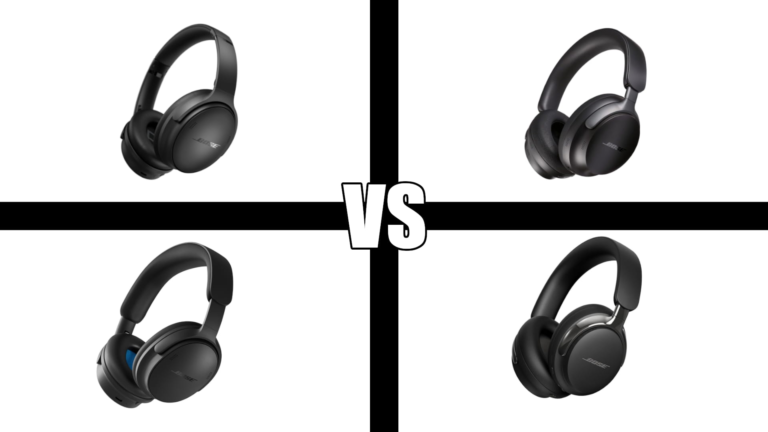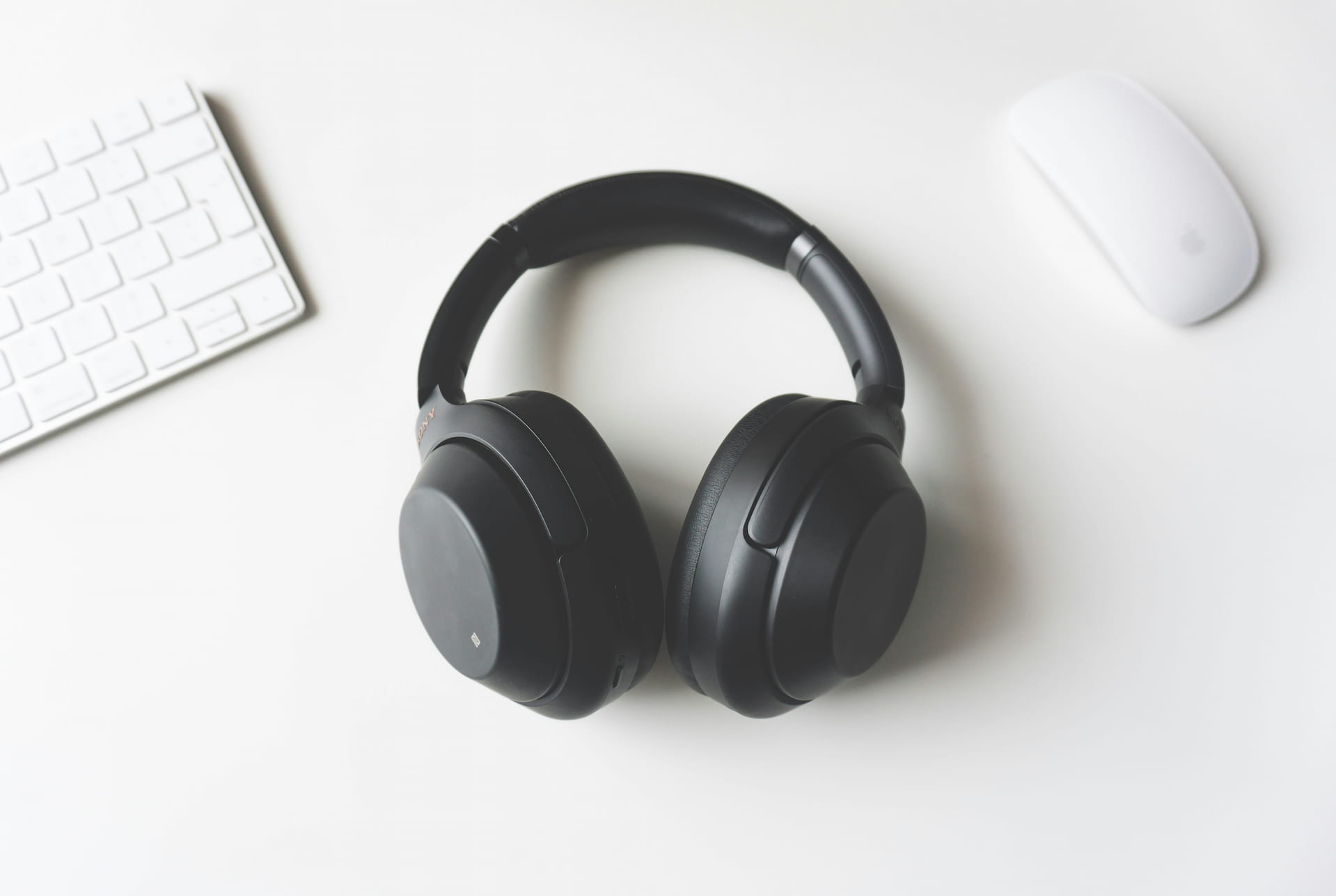
Sony XM5 vs XM6: What Actually Changed for Remote Work
Category: Tech & Gear | Reading time: 9 min | Last updated: September 2026
Disclosure: This post contains affiliate links. If you buy through our links we may earn a small commission at no extra cost to you.
The short answer: If you’re on video calls for hours every day, or you travel with your headphones, get the XM6. It has more microphones aimed at your voice, and it actually folds. If you sit at one desk and mostly want silence to focus in, the XM5 does that job just as well and costs less now that it’s the outgoing model.
Battery life, quick charge, multipoint pairing, and app support are identical. The differences that matter are in call pickup, portability, and how the two are tuned.
In this comparison
The differences that matter
1. Call pickup: the XM6 hears you better
This is the one that counts most for remote work, and the microphone counts explain why.
The XM5 has 8 microphones in total, 4 of them on the outside, 2 per ear cup. The XM6 has 12 in total, 6 on the outside, 3 per ear cup. More exterior microphones give the beamforming more to work with when it separates your voice from the room behind you.
The practical result is that people on your calls hear a cleaner version of you on the XM6. Reviewers consistently describe it as clearer and more audible than the XM5. If you’re in back-to-back meetings, that’s the single best reason to pay more.
If calls are the whole reason you’re shopping, also look at a headset with a boom mic, since a mic positioned near your mouth beats any array built into an ear cup. Our noise cancelling headphones guide covers those options too.
2. The XM6 folds, the XM5 doesn’t
The XM5 only lays flat. Sony brought proper folding back for the XM6 with hinged sliding arms, and the ear cups still swivel to rest around your neck.
For a desk setup this changes nothing. If you commute, travel, or move between a home office and a co-working space, it’s the difference between a bulky case and one that fits in a bag.
3. Noise cancelling is better, but both are strong
The XM6 runs Sony’s QN3 processor, which Sony says is about seven times faster than the QN1 in the XM5, and it has those extra microphones feeding it.
In practice the XM6 handles messier environments more gracefully. For the noise in a typical home office, which is HVAC, a dishwasher, a keyboard, someone talking in the next room, the XM5 already handles it. The gap shows up in a coffee shop or on a plane, not at your desk.
4. The XM6 is tuned more evenly
The XM5 has a pronounced bass shelf that some reviewers describe as bloated, with a somewhat recessed midrange. The XM6 tightens the bass, brings vocals forward with noticeably more clarity, and adds some sparkle up top.
Whether that matters depends on what you do with them. For music on your own time, the XM6 is the more refined listen. For calls and podcasts, the clearer midrange genuinely helps voices sit forward.
5. The XM6 adds LE Audio and Auracast
Both support SBC, AAC, and LDAC. The XM6 adds the LC3 codec along with Bluetooth LE Audio and Auracast support. Auracast lets you tune into shared broadcast audio in places like airports and gyms once venues support it.
Today this is mostly future-proofing. If you keep headphones for four or five years, it’s worth knowing which one has it.
6. The XM5 has the longer track record
Both sit at 4.2 stars, so there is no quality gap between them. The XM5 has roughly twice the reviews, around 7,002 to the XM6’s 3,790, and three years of buyers behind it rather than one. It is still selling in volume too, at 5,000 or more units last month. That is a certainty difference rather than a quality one, and it matters more if you dislike being an early owner.
What’s identical
Worth knowing before you pay more for things that didn’t change:
- Battery life. 30 hours on both.
- Quick charge. 3 minutes gives about 3 hours of playback on both.
- Multipoint. Both connect to two devices at once and switch between your laptop and phone without re-pairing.
- App. Both use Sony’s Headphones Connect app for EQ, noise cancelling adjustment, and firmware updates.
- Weight. Effectively the same, at about 250g for the XM5 and 254g for the XM6.
- Ambient sound mode. Both have it and it works the same way.
- Video calls. Both work with Zoom, Teams, Meet, and anything else over Bluetooth.
Sony WH-1000XM5: Best for desk-based work

The XM5 was the headphone every other pair got measured against for three years, and being replaced doesn’t undo that. The noise cancelling still shuts down a home office, the battery still runs 30 hours, and the comfort over a long day is a big part of why it sold as well as it did.
For a desk-based remote worker it covers nearly everything the XM6 does. You’re giving up some call clarity, the folding hinge, and a more even tuning. You’re keeping identical battery life, identical quick charge, the same multipoint switching, and the same app.
The one place it clearly trails is on calls. The 4 exterior microphones do a decent job, but the XM6’s 6 pull your voice out of a noisy room more cleanly. If your day is mostly focused work with a few meetings, that’s a reasonable trade.
“Exceptional battery life. Call quality that was considered good until I did a direct comparison to a headset made specifically for calls in noisy environments. They’ll do in a call, but not as a primary phone call device in noise. They are long-term comfortable, and amazingly my ears do not sweat much in these even after prolonged use. Update: still working great and I still use them every night.”
Who it’s for: Anyone working from a fixed desk who wants excellent noise cancelling for focus, takes a moderate number of calls, and doesn’t travel with their headphones.
Pros:
- Noise cancelling that handles a home office easily
- 30 hour battery, same as the XM6
- Three years and 7,000 reviews behind it
- Comfortable for full workdays
- Multipoint pairing and app support
- Lower price as the outgoing model
Cons:
- Only lays flat, doesn’t fold
- Fewer microphones for call pickup
- Heavier bass with a more recessed midrange
- No LE Audio or Auracast
| Spec | Detail |
|---|---|
| Microphones | 8 total, 4 exterior |
| Processor | QN1 |
| Battery | 30 hours |
| Quick charge | 3 minutes for 3 hours |
| Codecs | SBC, AAC, LDAC |
| Weight | About 250g |
| Folds | No, lays flat only |
Sony WH-1000XM6: Best for calls and travel
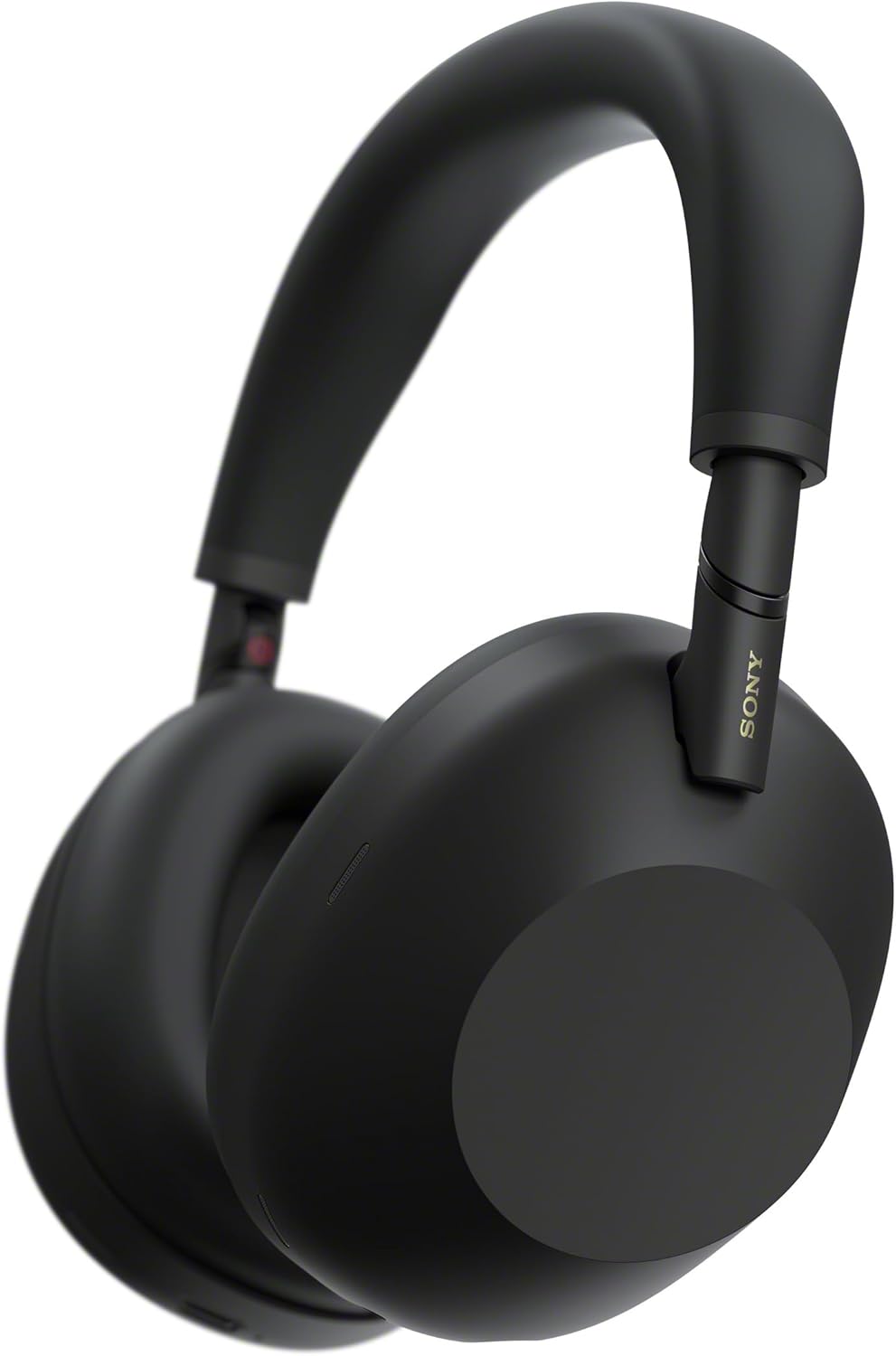
The XM6 is the better headphone, and for a remote worker the reason is narrower than the spec sheet suggests. It comes down to calls and portability.
Six exterior microphones instead of four, feeding a processor Sony rates at roughly seven times the speed, means the beamforming has more to work with when it separates your voice from the room. On a call where a dog barks or someone walks through, the XM6 keeps you intelligible where the XM5 starts letting the room through.
Folding is the other real upgrade. Sony took it away on the XM5 and plenty of owners complained. The hinged arms are back, so the case is smaller and it actually fits in a bag.
The tuning is more even too: tighter bass, vocals further forward, more detail up top. For podcasts and calls that clarity is a genuine benefit, not just an audiophile note.
“Awesome sound and great build quality. I have been amazed at how light and airy these feel while still being durable. Battery life is incredible. These have performed flawlessly on the ground and in the air. Noise cancellation works perfectly and I love the option to just touch the right ear to go to transparency mode for a quick conversation. This is one purchase that I enjoy every day.”
Who it’s for: Anyone on calls several hours a day, anyone who travels or commutes with headphones, and anyone buying a pair to keep for the next four or five years.
Pros:
- 12 microphones, 6 exterior, for noticeably better call pickup
- QN3 processor, about 7 times faster than the QN1
- Folds properly for travel
- More even tuning with clearer vocals
- LE Audio and Auracast support
- Same 30 hour battery as the XM5
Cons:
- Costs more as the current flagship
- 3,790 reviews, a shorter track record than the XM5
- The noise cancelling gain is modest in a quiet home office
| Spec | Detail |
|---|---|
| Microphones | 12 total, 6 exterior |
| Processor | QN3, about 7x faster than QN1 |
| Battery | 30 hours |
| Quick charge | 3 minutes for 3 hours |
| Codecs | SBC, AAC, LDAC, LC3 |
| Weight | About 254g |
| Folds | Yes, hinged arms |
Specs comparison
| Feature | Sony WH-1000XM5 | Sony WH-1000XM6 |
|---|---|---|
| Microphones | 8 total, 4 exterior | 12 total, 6 exterior |
| Processor | QN1 | QN3, about 7x faster |
| Folds | No | Yes |
| Battery | 30 hours | 30 hours |
| Quick charge | 3 min for 3 hrs | 3 min for 3 hrs |
| Multipoint | Yes | Yes |
| Codecs | SBC, AAC, LDAC | SBC, AAC, LDAC, LC3 |
| LE Audio and Auracast | No | Yes |
| Weight | About 250g | About 254g |
| Ambient sound mode | Yes | Yes |
| Rating | 4.2/5 | 4.2/5 |
| Reviews | 7,002 | 3,790 |
Who should buy which
Buy the XM6 if:
- You’re on video calls several hours a day and want to be heard clearly
- You travel or commute and want headphones that fold
- You want the more even tuning for music and podcasts
- You’re keeping these for four or five years and want LE Audio
Buy the XM5 if:
- You work from one desk and mostly want quiet to focus in
- Your calls are occasional rather than constant
- You’d rather put the difference toward something else in your setup
- You want the model with three years and 7,000 reviews behind it
Don’t upgrade from XM5 to XM6. If you already own the XM5 and it works, the gains are real but small for home office use. Battery, quick charge, multipoint, and app support are identical. Unless you specifically need better call pickup or folding, keep what you have.
Still weighing Bose? Our Bose QC Ultra vs Sony XM6 comparison covers which one wins on microphone quality, and our Bose QuietComfort Ultra 2nd Gen review goes deeper on that pair. For the rest of your audio setup, our video call setup guide covers microphones and room acoustics alongside headphones.
We ran the same comparison across their lineup in Bose QuietComfort vs Ultra, where the newer generation turned out to be a smaller upgrade than the numbers suggest.
Frequently asked questions
What is the difference between the Sony XM5 and XM6?
Six things: the XM6 has 12 microphones to the XM5’s 8, a QN3 processor about seven times faster than the QN1, a folding hinge the XM5 lacks, more even tuning with clearer vocals, LE Audio and Auracast support, and a shorter review history. Battery life, quick charge, multipoint, and the app are identical.
Is the XM6 worth upgrading from the XM5?
If you already own the XM5, no. The headphones last the same amount of time on a charge and handle a quiet home office about equally. Upgrade only if you need better call pickup or you want headphones that fold for travel.
Which is better for video calls?
The XM6. It has 6 exterior microphones against the XM5’s 4, and the beamforming separates your voice from room noise more cleanly. If calls are most of your day, that’s the strongest argument for paying more.
Is there a weight difference between the XM5 and XM6?
Barely. The XM5 is about 250g and the XM6 about 254g, so roughly 4 grams apart. Neither feels heavier on your head, and comfort over a long day comes down to fit rather than those few grams.
Do both have 30 hour battery life?
Yes. Both run 30 hours with noise cancelling on, and both give about 3 hours of playback from a 3 minute charge. Battery is not a reason to choose between them.
Does the XM5 fold?
No. The XM5 lays flat and the ear cups swivel, but the arms don’t fold inward. The XM6 brought proper folding back with hinged sliding arms, which is why its case is smaller.
Do both work with the Sony app?
Yes. Both work with the Sony Headphones Connect app for EQ, noise cancelling adjustment, and firmware updates. You can find it through Sony’s support site.
Which has better noise cancelling?
The XM6, but the gap is smaller than it sounds for home office use. In a quiet room both shut out HVAC, keyboard noise, and background conversation. The XM6 pulls ahead in harder environments like a plane or a busy cafe.
Do both support multipoint with a laptop and phone?
Yes. Both connect to two devices at once and switch automatically, so a call on your phone can interrupt audio from your laptop without re-pairing.
Continue reading
Prices change often. Check current pricing at checkout. Last updated September 2026.