Bose QuietComfort vs Ultra 2026: Which One Is Actually Worth It?
Category: Tech & Gear | Reading time: 13 min | Last updated: October 2026
Disclosure: This post contains affiliate links. If you buy through our links we may earn a small commission at no extra cost to you.
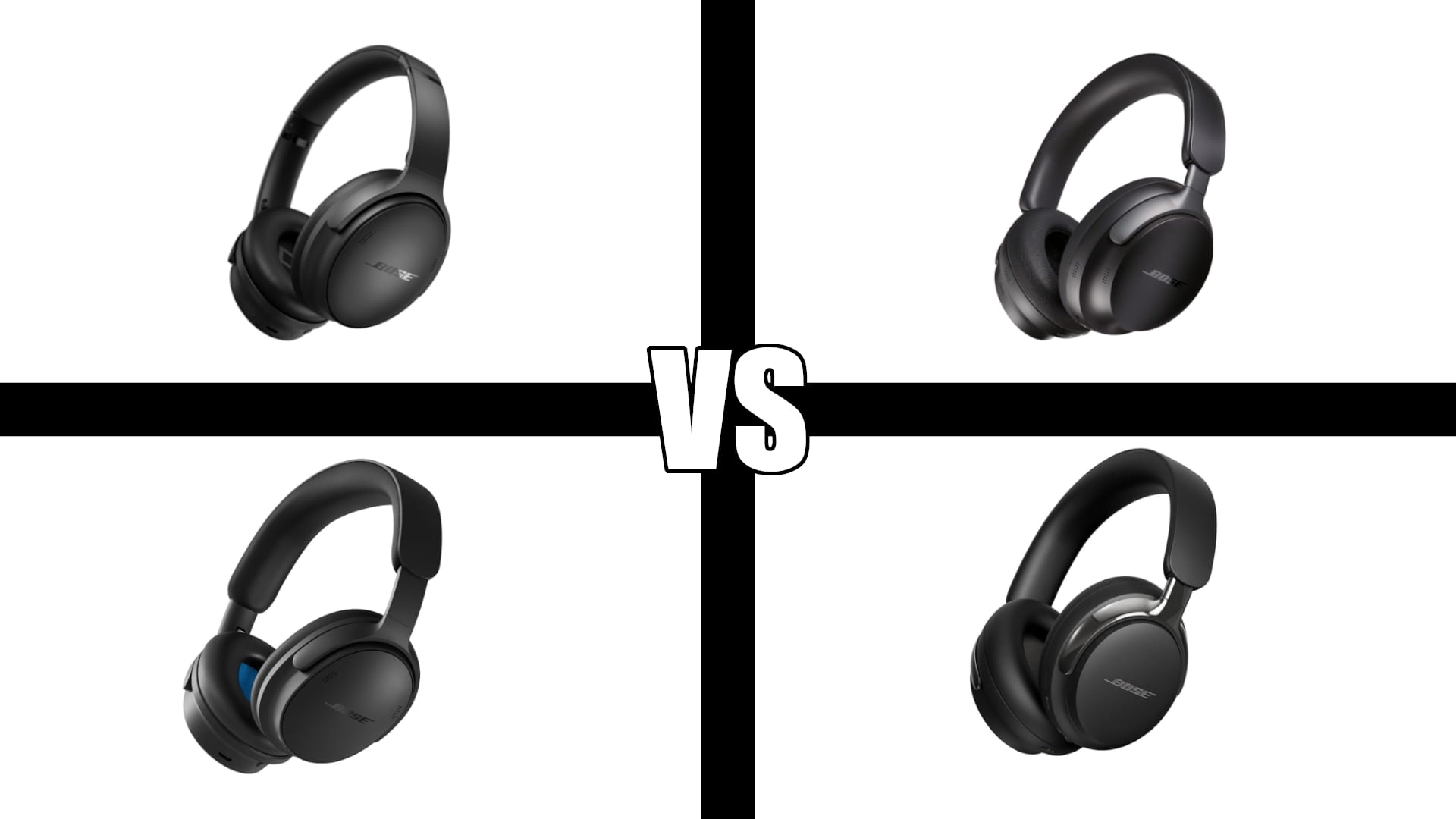
Bose sells four over-ear QuietComfort headphones at once, and two pairs share almost the same name. The product pages read like they were written to make you give up and buy the most expensive one.
Do not do that. Three things decide this purchase, and all three point away from the default answer: the feature that used to justify the Ultra now ships on the standard model, independent testing found the battery gap smaller than the spec sheet claims, and the highest rated headphones in this lineup are not the expensive ones.
We also read the critical reviews on all four. Not one complains about sound or noise cancelling. Every recurring problem is physical, and that turns out to be the most useful thing here.
Jump to a section
The quick answer
| You want | Buy |
|---|---|
| The best noise cancelling Bose makes, money aside | Ultra 2nd Gen |
| Flagship features without flagship pricing | Ultra 1st Gen, when discounted |
| The best all-day comfort for desk work | QuietComfort 2nd Gen |
| Noise cancelling on a budget, nothing fancy | QuietComfort 1st Gen |
If you read one line: the Ultra 1st Gen is the value play right now, and the QuietComfort 2nd Gen is the one most home office workers will actually be happiest with.
All four compared
| QuietComfort | QC 2nd Gen | Ultra | Ultra 2nd Gen | |
|---|---|---|---|---|
| Battery, ANC on | 24 hrs | 24 hrs | 24 hrs | 30 hrs |
| Battery, Immersive | None | 18 hrs | 18 hrs | 23 hrs |
| Immersive Audio | No | Yes | Yes | Yes |
| Cinema mode | No | Yes | No | Yes |
| Modes | Quiet, Aware | Quiet, Aware, Immersion, Cinema, ANR off | Quiet, Aware, Immersion | Quiet, Aware, Immersion, Cinema, ANR off |
| CustomTune | No | No | Yes | Yes |
| Wired listening | Analog cable with mic | USB-C lossless | None | USB-C lossless |
| Controls | Buttons | Buttons | Touch | Touch strip |
| Bluetooth | 5.4 | 5.4 | 5.3 | 5.4 |
| Owner rating | 4.5 | 4.6 | 4.2 | 4.3 |
Two rows are worth staring at. The QuietComfort 2nd Gen and the Ultra 1st Gen have identical rated battery life, so the middle of this lineup is closer than the pricing suggests. And Cinema mode is on the 2nd Gen of both tiers and neither 1st Gen, which makes it a generation feature rather than a premium one.
What actually separates them
Paying up for the Ultra
Immersive Audio used to be the Ultra’s reason to exist. The QuietComfort 2nd Gen now has TrueSpatial with Immersion, Cinema and ANR off, the same mode list as the Ultra 2nd Gen. That gap is gone.
What the Ultra still buys you: noise cancelling intensity that reviewers rate as class leading, CustomTune calibration that shapes sound to your ear canal, aptX Adaptive for hi-res wireless on Android, and metal rather than plastic. If you are on iPhone, aptX does nothing for you, because iOS does not support it.
What it costs you beyond money is weight. The QuietComfort 2nd Gen is roughly 34 grams lighter than either Ultra. On a flight that is nothing. Across eight hours at a desk it is the difference between forgetting you have headphones on and being aware of them by mid-afternoon.
Paying up for the newer generation
For the Ultra, the upgrade is smaller than the numbers imply. Bose rates the 1st Gen at 24 hours and the 2nd Gen at 30, but SoundGuys measured both at roughly 27 hours of real playback, with the older model beating its rating and the newer one falling short of its own. Noise cancelling measured about 87 percent reduction on both, and they called the 2nd Gen’s improvement imperceptible in use.
The finding nobody expects: the 1st Gen’s microphone tested better. More than 70 percent of users rated it good or perfect, while the 2nd Gen showed a slight decline. If you live on video calls, that argues against the newer model.
The Ultra 2nd Gen does genuinely add Cinema mode, USB-C wired listening where the 1st Gen has none at all, the ability to switch noise cancelling fully off, Bluetooth 5.4, and a more neutral tuning. Real improvements, but an evolution rather than a revolution.
For the standard QuietComfort, the jump is much bigger. The 2nd Gen adds Immersive Audio and Cinema mode where there was none, USB-C lossless replacing an analog cable, ActiveSense adaptive noise reduction, and a redesigned wider headband. Battery is the one thing that did not move.
Watch the discounting. The Ultra 1st Gen drops hard and the 2nd Gen rarely does, often landing near what the QuietComfort 2nd Gen costs. When it does, you are getting flagship noise cancelling and CustomTune for midrange money. Our home office Black Friday guide tracks when last generation flagships fall furthest.
Bose QuietComfort Headphones

The model that built the QuietComfort reputation, and still a genuinely good pair. What you give up is everything spatial: no Immersive Audio, no Cinema mode, no TrueSpatial. If you only want the outside world to go quiet while you work, you will not miss any of it.
The analog cable is worth noting. This is the only model here that works passively with a dead battery, which the newer USB-C models cannot do.
“These headphones are EXCELLENT. They are surprisingly light to wear, and are actually very comfortable. These can be worn for a long time with little to no discomfort. Now, to the noise cancelling. Incredible. If you have nothing coming through the speakers, they still reduce outside noise, a TV for example, by I would guestimate 90%. The sound quality blew my mind. Rich, and creamy like melted chocolate.”
Who it’s for: Anyone who wants quiet and nothing else, and would rather spend less.
Pros:
- The lightest way into Bose noise cancelling
- Works wired and passive with a dead battery
- Adjustable three band EQ
Cons:
- No Immersive Audio or Cinema mode at all
- Only two listening modes
- No USB-C lossless listening
Bose QuietComfort Headphones 2nd Gen

The model that changed the lineup. It takes the mode list that used to justify the Ultra and puts it on the standard tier, then adds USB-C lossless on top.
For desk work it is the one we would pick. Around 34 grams lighter than either Ultra, with a wider redesigned headband that spreads pressure better than the model it replaces. Independent reviewers rated it 8.4 out of 10 and called comfort its standout quality.
The honest limitation is battery. It stayed at 24 hours while the Ultra 2nd Gen moved to 30, and reviewers flagged that as the one place Bose did not improve. Irrelevant if you charge at a desk nightly, a real gap if you travel heavily. Noise cancelling improved, notably for glasses wearers, but does not reach the Ultra’s ceiling.
“2nd pair of these. There’s a noticeable difference in the thoroughness of the noise-cancelling. The cinema feature is nice too and makes a difference. Comfortable with some tweaks to the headpiece. Above all, it has that amazing, hi-end Bose audio quality that audiophiles love.”
Who it’s for: Anyone wearing headphones through a full workday who wants the modern feature set.
Pros:
- Same mode list as the Ultra 2nd Gen, including Cinema
- Roughly 34 grams lighter than either Ultra
- USB-C lossless listening
- Highest owner rating in the lineup
Cons:
- Battery unchanged at 24 hours
- No CustomTune or aptX Adaptive
- Noise cancelling good but not Ultra level
Bose QuietComfort Ultra
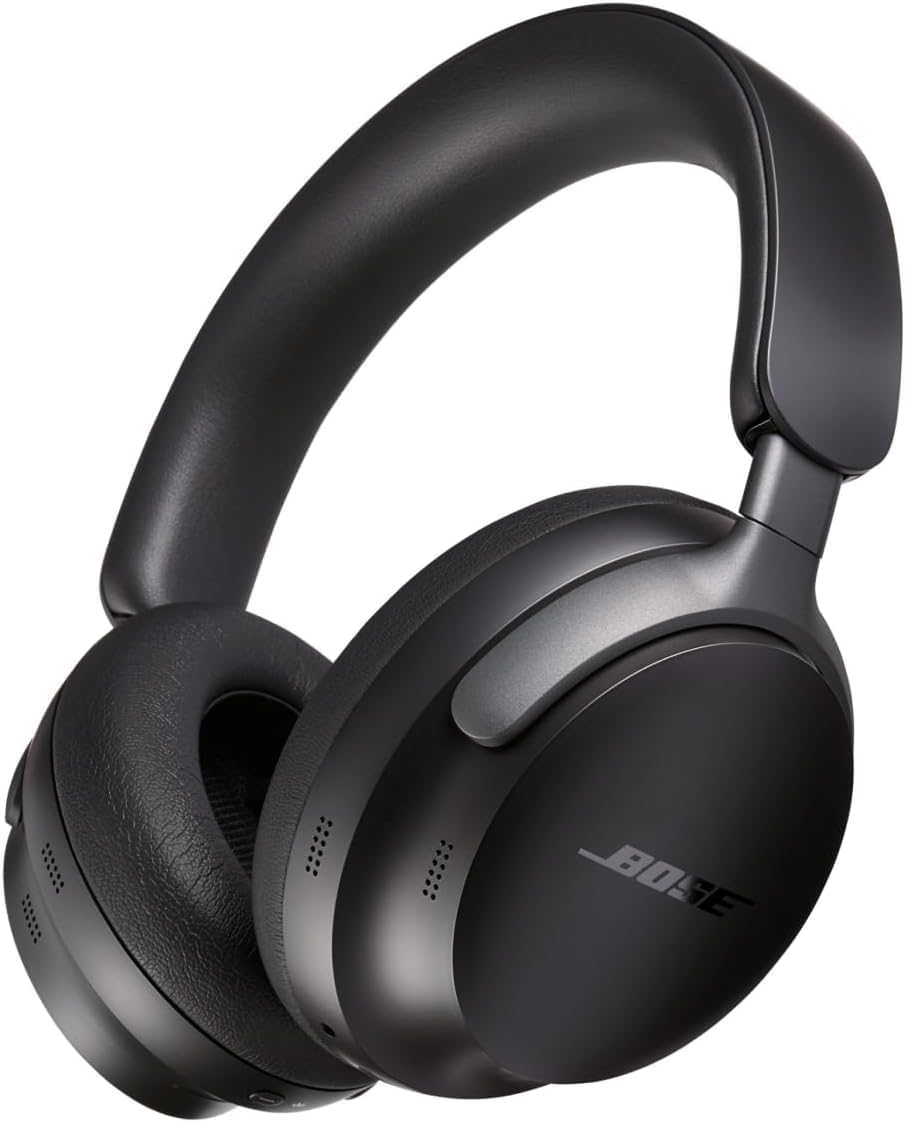
The most interesting pair here, because the gap to its replacement is narrower than the generation number suggests. Measured battery and noise cancelling come out roughly even with the 2nd Gen, and its microphone tested better. You get CustomTune and the noise cancelling reviewers rate above anything near its class.
What you give up: no Cinema mode, no wired listening of any kind, no way to switch noise cancelling fully off, and Bluetooth 5.3. The tuning has a stronger bass lift and a treble peak around 8kHz where the newer model sits closer to neutral.
One caution before you buy: handle them carefully. The most detailed critical review we found came from a daily user who broke two separate pairs, each from a drop of under two feet, one onto carpet from a seated position. Same symptom both times. That is one owner rather than a recall, but headphones living on a desk get knocked off, so a case is worth having. Bose replaced both pairs free and quickly, which counts for something.
“These are great headphones at a solid price compared to other higher end models. The different modes are excellent. If I’m on the train going to work I use quiet mode. If I’m practicing my musical instrument with a backing track, aware mode works very well. So far these are reliable, sound great, are easy to use and above all, comfortable. I tried the AirPods Max as well, which sounded great but were just too heavy for me.”
Who it’s for: Anyone who wants flagship noise cancelling and will buy last year’s model to get it.
Pros:
- Class leading noise cancelling with CustomTune
- Microphone tested better than the 2nd Gen
- Discounts far more heavily than the current model
- Bose support replaces broken pairs quickly
Cons:
- Owners report breakage from short drops
- No Cinema mode and no wired listening at all
- Cannot fully disable noise cancelling
- Lowest owner rating of the four
Bose QuietComfort Ultra 2nd Gen
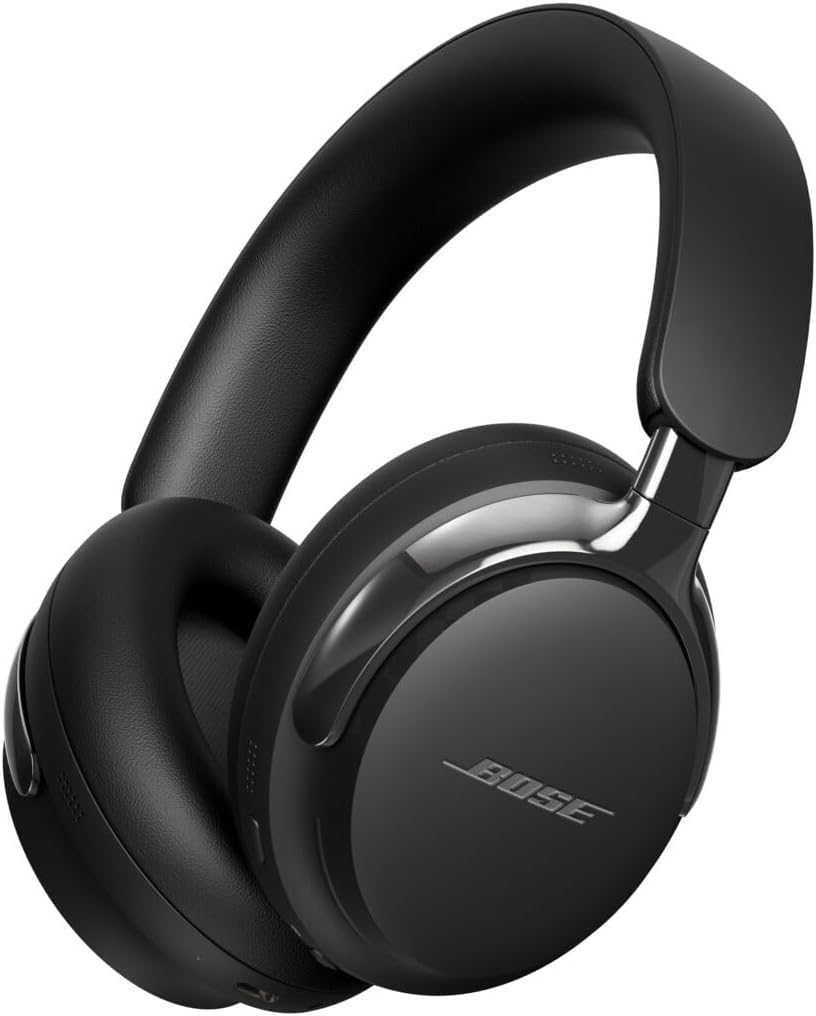
The most capable headphones Bose makes, and the right pick if you want the ceiling rather than the value. One reviewer called the noise cancelling the best available at anything like this price, outperforming headphones costing considerably more. At around 250 grams it is lighter than most rivals in its class, even while being the heavier choice within this lineup.
Reviewers’ two criticisms: the app lags behind competitors, and perceived value is not as high as rival models, which is a polite way of saying it feels expensive for what it is.
The comfort question is not simple. Bose markets these on all day comfort and plenty of owners agree, but critical reviews turn up two physical complaints worth checking against your own head. The earcups seal tightly, which is good for isolation and bad for heat. And pressing into the padding under the headband reveals that the arch separates into firm ridge-like sections with fairly sharp edges, which some owners report biting into the scalp over hours. It is head shape dependent, which is exactly why it is worth knowing before you commit rather than discovering in week two.
“The sound quality is outstanding, with rich detail, deep bass, and clear vocals that make music, podcasts, and movies feel more immersive. The noise cancellation is excellent and helps block out distractions, making them perfect for travel, work, or relaxing at home. The headphones are incredibly comfortable, even during long listening sessions. The ear cushions feel soft, the fit is secure, and the lightweight design makes them easy to wear for hours.”
Who it’s for: Anyone who wants the best noise cancelling Bose makes and is not shopping on value.
Pros:
- Best noise cancelling in the lineup and arguably its class
- Longest battery at 30 hours, 23 with Immersive
- Cinema mode and USB-C lossless listening
- Charges while you listen
Cons:
- Headband underside has firm ridges some owners find painful over hours
- Tight earcup seal runs hot in warm rooms
- Microphone tested slightly worse than the 1st Gen
- Rarely discounts
What the critical reviews reveal
The ratings run opposite to the pricing. The QuietComfort sits at 4.5 and the 2nd Gen at 4.6. The Ultra is at 4.2 and the Ultra 2nd Gen at 4.3, and the Ultra has over ten thousand ratings behind it, so this is not a small sample artifact.
The obvious explanation is that expectations scale with price. That is only part of it.
Across the critical reviews on all four, nobody complains about sound and nobody complains about noise cancelling. Several reviewers praise both at length before explaining why they returned the headphones anyway. Every recurring problem is physical: how they sit on your head, how hot they get, and how they survive being dropped.
That reframes the rating gap. The Ultras are not rated lower because they perform worse. They are rated lower because a meaningful number of people cannot comfortably wear them.
“I really wanted to love these because the sound quality and noise cancellation was amazing, but the truth is they are simply uncomfortable. I bought these because I was in search of headphones that I could wear 8 to 12 hours a day, but these give me painful migraines and jaw pain after only an hour of use every single time I tried to use them. The battery life is excellent. The materials feel high quality. However, personally, they are prohibitively painful. FWIW, my jawline is very pronounced and my head is large, so YMMV.”
The most useful critical review identified something you can physically check for before buying.
“At first I thought the QuietComfort Ultra 2nd Gens were gonna beat out the Sony 1000X for me, the fit was almost like a glove. But after wearing them all afternoon, two uncomfortable problems developed. Sweaty ears, my ears were getting quite hot inside. And scalp pain. I found that if I pressed my fingertips into the padding on the underside of the headband, I could feel that its arch separates at certain points into jagged, toothlike sections. These are thin, with fairly pointy edges, and they were starting to bite into the top of my head. The pain just got worse the longer I tried to wear them.”
On the 1st Gen the complaint is durability rather than comfort.
“These headphones perform flawlessly. The noise cancellation is notably better than any other noise cancelling headphones I’ve tried. But they are beyond fragile. I had them less than a year when I dropped them on a carpeted floor from a seated position and they stopped working. The drop was maybe 2 feet. Bose made it right, they sent me a free new pair. A few days ago I dropped them again, this time on a hardwood floor, and even though the drop was once again less than two feet, they no longer worked. I bought the original Bose noise canceling headphones back in 2010 and they lasted well over 10 years.”
What to do with this. None of it is a reason to avoid the Ultras. The comfort complaints are head shape dependent, and the same reviewer with scalp pain initially described the fit as excellent. The breakage reports are individual accounts.
But buy somewhere with a real return window and spend the first week testing comfort rather than sound, because these problems show up in hour three, not minute ten. If you run warm or work in a warm room, the tighter seal cuts both ways. And if your headphones live on a desk, get a case.
Frequently asked questions
What is the actual difference between Bose QuietComfort and QuietComfort Ultra?
Four things in the current generation: stronger noise cancelling, CustomTune calibration, aptX Adaptive for hi-res wireless on Android, and metal rather than plastic. Immersive Audio and Cinema mode used to be Ultra exclusives and are now on the standard 2nd Gen, which removes the biggest reason the gap existed.
Is the Ultra 2nd Gen worth upgrading to from the 1st Gen?
Independent testing says no. SoundGuys measured both at roughly 27 hours of playback and about 87 percent noise reduction, and found the newer model’s improvement imperceptible in use. You would be upgrading for Cinema mode, USB-C wired listening, and a more neutral tuning.
Which Bose headphones are best for working from home?
The QuietComfort 2nd Gen for most people. Roughly 34 grams lighter than either Ultra, which matters across a full workday, and it now has the same listening modes as the flagship. Choose an Ultra if your home is genuinely loud and you need the stronger noise cancelling.
Which Bose headphones have the best microphone for calls?
Surprisingly, the Ultra 1st Gen. More than 70 percent of users rated its microphone good or perfect, while the 2nd Gen showed a slight decline despite adding AI-based noise suppression. Our video call setup guide covers whether a headset mic is the right choice at all.
Are the Ultras comfortable for all day wear?
For most people yes, but it depends on head shape more than Bose’s marketing suggests. Critical reviews describe the tight earcup seal running hot, and firm ridges on the underside of the headband that some owners feel biting into the scalp after a few hours. Owners with larger heads or pronounced jawlines report the worst of it. Test for three hours inside your return window.
Do any of these work wired?
Three of the four, in two ways. The QuietComfort uses an analog cable and works passively with a dead battery. The QuietComfort 2nd Gen and Ultra 2nd Gen support USB-C lossless listening, which needs power. The Ultra 1st Gen has no wired listening at all.
How do these compare to Sony?
Our Bose QuietComfort Ultra vs Sony WH-1000XM6 comparison covers that head to head, and our Sony XM5 vs XM6 post covers the same generational question on Sony’s side.
Sources and references
- Bose QuietComfort Headphones 2nd Gen vs QuietComfort Ultra Headphones 2nd Gen, What Hi-Fi
- Bose QuietComfort Ultra Headphones 2nd Gen vs QuietComfort Ultra Headphones: Should you upgrade?, SoundGuys
- Bose QuietComfort Headphones 2nd Gen review, Engadget
- Bose QuietComfort Ultra Headphones 2nd Gen review, TechRadar
- Bose QuietComfort Ultra 2nd Gen Review, Home Office Nomad
Continue reading
Prices change often. Check current pricing at checkout. Last updated October 2026.